
Welcome to Colmer Ecology ltd. an independent ecological consultancy based in the South of England. We provide ecological advice to the public and private sector.
Please browse through our website for a complete list of our services and further information.The Senate
Southernhay Gardens
Exeter
Devon
EX1 1UG
M: 07857 377804
mail@colmer-ecology.co.uk
-
Services
Pre-Development Assessment

Thinking of purchasing a site for development or non-development purposes? Unsure of the ecological constraints in terms of time and financially? Thinking of land banking during an economic downturn, but unsure as to how your site should be managed to reduce your ecological risk?
If your answer is yes to any of these, Colmer Ecology ltd. provides an initial pre-development or pre-purchase walkover survey which aims to identify the following:
- The potential ecological issues the site may have;
- What further surveys may be required and the likely timescales of any survey;
- Cost implications;- And any ongoing land management of a site where land banking is proposed in order to reduce your ecological risk.
Our initial pre-development surveys could also be used to negotiate any land purchase price, but it specifically enables our clients to be fully aware of potential constraints and further implications. This is an invaluable tool when assessing cost exposure. As each site is unique, the price for a pre-development survey varies. Therefore please contact us to discuss your requirements.
-
Services
Phase 1 Habitat Survey / Extended Phase 1

A Phase 1 Habitat Survey is a standardised method of classifying and mapping various habitat types within a site. It follows Joint Nature Conservation Committee methodology which is designed as a rapid assessment of a site's botanical interest but also its potential for protected species.
Phase 1 Habitat Surveys are normally the first ecological survey required, and are generally requested as part of a planning application. They also form the baseline ecological overview of a site.
Although a Phase 1 Habitat Survey maps different habitat types and the potential for protected species, it does not specifically identify the presence of protected species. It generally only identifies the potential.
Our Phase 1 Habitat Survey reports provide full descriptions of each habitat type, the flora species identified, a map with associated target notes and the potential for protected species.
Our reports also provide recommendations, such as further surveys if deemed necessary. Depending on the site, a desk study of protected sites, habitats, and species may also be required.
Please contact us to discuss your requirements. -
Services
BREEAM / Code for Sustainable Homes

BREEAM (Building Research Establishment Environmental Assessment Method) and the Code for Sustainable Homes (CFSH) are the recognised industry wide standards for environmental assessments of building developments and refurbishments.
Certain developments such as those on the Government Estate, non-domestic public sector buildings, and all new housing funded by the Homes and Communities Agency are required to meet at least a BREAAM Excellent score or Code Level 3.
In addition, BREEAM and CFSH assessments are occasionally compulsory via a planning condition on a new development.Both BREEAM and CFSH assessments utilise a scoring system whereby credits are achieved in a variety of categories. This score or level is based on the accumulation of credits from the various categories. Ecology accounts for 12% of the overall assessment with a maximum of nine credits available for CFSH.
All BREEAM and CFSH ecology assessments must be compiled by a suitably qualified ecologist (SQE).Colmer Ecology ltd. can provide an all in one package which includes a site visit to assess the ecological value of the site through to completing the relevant assessment. Our experience has shown that in order to maximise the available credits, a SQE's involvement should be sought at the earliest opportunity. Our BREEAM and CFSH services therefore aim to maximise the credits available, but at the same time creating new ecologically rich and practical solutions within a development.
-
Services
Environmental Stewardship / Farm Environment Plans

With an emphasis on managing the countryside more sympathetically for wildlife and habitats, a variety of Environmental Stewardship schemes are available to farmers and landowners/managers. These include entry level (ELS), organic entry level (OELS), upland entry level (Upland ELS), and higher level (HLS) stewardships.
These agri-environment schemes provide funding to deliver set goals and effective land management incentives throughout England.
A pre-requisite for HLS is the implementation of a farm environment plan (FEP), which is an assessment of the condition of features within a farm. This helps to determine the level of management which could be achieved and the potential for creating new environmental features and habitats.
Colmer Ecology ltd. can provide advice in carrying out Environmental Stewardship and completing the necessary application material. In addition, we specialise in surveying farms for the preparation of FEP's and identifying priority species.
We can also offer advice in relation to game and conservation management, maximising the potential of a farm/estate for wild game bird resources.
Please contact us to discuss your requirements.
Protected Species Summary
Several species and habitats found within the UK are protected by European and UK legislation. Therefore the need for identifying protected species is a legal requirement.
The need for further protected species surveys is normally highlighted during our Pre-development/Extended Phase 1 Habitat Surveys. This enables time delays to be minimised during planning applications and decreases the costs associated with delays, while safeguarding the protection and continued ecological functionality of protected species.
The recognition of a protected species can be a significant constraint to any development proposal. They also have the potential to dictate the time, location and nature of the construction. Early identification through protected species surveys enables appropriate mitigation to be designed, licences to be applied for, and the implementation of works. Many planning applications are refused or rejected due to inadequate identification or the likelihood of protected species being present on a site.
Colmer Ecology ltd. has considerable experience in dealing with protected species and is able to assist from initial surveys to planning application and European Protected Species (EPS) licensing. Please follow the tabs at the top of this page for further species specific information.
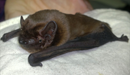
All 17 breeding British bats species and their roosts are legally protected in the United Kingdom and are often referred to as European Protected Species (EPS). This is due to bats being listed on Annex IV of EEC Council Directive 92/43 of 21st May 1992, referred to as the Habitats Directive. The UK ratifies this directive by providing protection to bats under what is generally termed The Conservation Regulations. Further protection is provided via transposing the Bern Convention into the Wildlife and Countryside Act (as amended) 1981.
The UK is a signatory to the Agreement on the Conservation of Bats in Europe. Under this agreement there is an obligation to protect all bats and their habitat, as well as indentify and protect from disturbance or damage, important feeding areas for bats.
Bats hibernate during the winter and there are specific times when surveying can be carried out. Colmer Ecology ltd. can provide initial bat building and tree assessment surveys, evening emergence and transect surveys, EPS licence applications, mitigation design and implementation, and also research studies. We can provide these services both in house and also by utilising a network of highly experienced associates.
So if you have recently been refused planning permission on grounds of bat ecology, or require assistance with bat surveys, please feel free to contact us and we will be pleased to assist.
Survey TimingBat Building Assessments: Any time of the year
Emergence Surveys: May - September (however, certain core months must be covered)

The Protection of Badgers Act 1992 provides protection to badgers themselves and their setts. The legislation makes it illegal to wilfully kill, injure or maim a badger, and intentionally interfere with a sett, damage or destroy all or part of a sett, obstruct a sett entrance or disturb a badger occupying a sett. Badgers live in (often large) social groups and within well defined territories. They are a widespread species, most common in lowland habitats such as woods, pastures and scrubland. Although a generally secretive animal, badgers also occupy territories within urban environments where they can thrive. Therefore their presence within such environments should not be underestimated.
Colmer Ecology ltd. is able to provide a full suite of badger surveys, such as initial walkover assessments to establish presence, badger bait marking to identify separate badger territories, licence applications, badger sett closure and artificial sett creation and installation.
So if you are unsure whether badgers are present on your site and what your obligations are, feel free to contact us for impartial advice and recommendations.
Survey TimingPresence/Likely Absence: Any time of the year, but February - April and October - November optimal
Sett Closure (under licence): July - November
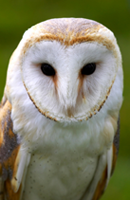
Colmer Ecology ltd. specialises in ornithology having experience of numerous bird surveys throughout the UK. These have included onshore wind farms, large and small scale housing developments, pre and post construction estuarine bird surveys and monitoring, sand extraction sites and research studies. All our bird surveys follow appropriate methodology such as common bird census territory mapping, WeBS counts, Brown and Shepherd upland wader and O'Brien and Smith lowland wader surveys, Scottish Natural Heritage wind farm methodology and species specific vantage point surveys.
We also hold a Natural England Schedule 1 barn owl survey licence and have worked on numerous barn conversions where barn owls have been present. If you are planning a development, a barn conversion, or simply wish to discuss the requirement of a bird survey or surveys, please feel free to contact us.
Survey TimingBreeding: March - June/July
Wintering: September - February/March

Dormice are a European Protected Species covered by the same legislation as bats and great crested newts, which protect the species and their habitat used for rest and shelter. Dormice spend a considerable amount of time in hibernation and/or torpor and are affectionately known as the seven months sleeper. During their active period they are largely arboreal, only coming to ground to hibernate in the autumn/winter. Although traditionally thought to only favour species rich woodland and hedgerows, dormice can be found in a range of habitats such as bramble scrub, coniferous woodland, costal sites, reedbeds and heathland. But this is highly dependant on connectivity to favourable habitat.
If suitable dormouse habitat is identified and is likely to be impacted by development, a presence/likely absence survey may be required. Although finding a characteristically gnawed nut during a nut search proves presence, a negative is not sufficient to confirm absence. Therefore, a specific survey using nest tubes and/or boxes checked over a period of months would be required.
Colmer Ecology ltd. has many years experience working with dormice and specialises in their surveying, assessing impacts and applying for appropriate licenses. We pride ourselves in giving technical and specialist advice, recommendations and innovative solutions to our clients, both on time and on budget. If you wish to discuss any survey requirements or an initial site assessment, please contact us.
Survey TimingNut Searches: Mid August - Before Christmas
Presence/Likely Absence: April - November

As with bats and dormice, great crested newts are a European Protected Species (EPS) with individuals, their eggs, and habitat used for rest and shelter being protected by European and UK legislation. Great crested newts (GCN) hibernate on land during the winter and can become active as early as February in some areas. Breeding, within the aquatic environment, occurs during the spring. In order to survey for GCN, strict protocols are provided by Natural England. This dictates what methods must be used and when they should be undertaken. For example presence/likely absence surveys are restricted to the active period for newts with surveys spread between March - June.
Due to the short survey window, significant time delays can be experienced. To avoid this, any suitable water body in or adjacent to a site is subject to a GCN Habitat Suitability Index (HSI) survey during our Extended Phase 1 Habitat Surveys. This follows methodology described by the Oldham Criteria and can be undertaken at any time of the year. It provides a rapid assessment of a waterbody's suitability to support GCN and the need for further surveys.
Colmer Ecology ltd. is highly experienced in GCN ecology and has several years experience undertaking HSI assessments, GCN surveying, mitigation design, EPS licence applications, trapping and exclusion projects. We aim to identify potential issues as early as possible to reduce time delays. We have great pride in providing technical advice and solutions to our clients while keeping amphibian conservation our key priority. For further information contact us.
Survey Timing
Habitat Suitability Index: Any time of the year (weather dependant)
Presence/Likely Absence: March - June (specific methodology must be followed)
Mitigation: March - October
 Otter
Otter
Otters are a European Protected Species (EPS) and our clients therefore need to be aware of the legal protection of this species and its habitat. They are predominately nocturnal and highly dependent on the aquatic environment but leave characteristic field signs which are searched for. Nationally, the otter population has shown a gradual increase and can now be found in all counties of England. With this in mind, there may be potential conflicts during development works. Colmer Ecology ltd. covers all aspects of otter surveying, from initial site assessment to more extensive surveys for road and bridge schemes, licence applications, mitigation design and implementation.
Water voleAlthough not an EPS, water voles are protected by the Wildlife and Countryside Act (as amended) 1981. As such, any works that are likely to impact on water voles and/or damage, destroy or obstruct access to any structure or place used as shelter or protection, or disturb water voles, is likely to require a survey and subsequent mitigation. We have extensive experience of water vole surveys and where necessary, we can tailor our surveys to include both otter and water vole.
For more information,call or email us..
Otter: Any time of the year (weather and water level dependant)
Water vole: Any time of the year (weather and water level dependant)

The six native British reptile species include grass snake, smooth snake, adder, slow worm, common lizard and sand lizard. All are protected, with smooth snake and sand lizard being European Protected Species. The remaining four are protected by the Wildlife and Countryside Act (as amended) 1981. Reptiles hibernate during the winter but can be found on a variety of habitats such as rough grassland, scrub, woodland, roadside boundaries, waste ground, moors and heaths. Identifying potential reptile habitats is key for any reptile survey, and we cover this in either our Pre-Development Site Assessment or Extended Phase 1 Habitat Surveys. Where suitable habitat is identified, there may be the requirement to conduct a presence/likely absence survey and subsequently a reptile mitigation strategy and translocation. A licence is only required for surveying and translocating sand lizard and smooth snake.
Colmer Ecology ltd. is able to provide initial site assessments, presence/likely absence surveys, reptile mitigation design, implementation of exclusion fencing and subsequent reptile translocations and destructive searches. We have been involved in numerous reptile projects and pride ourselves in designing novel and long term solutions for reptile conservation. Please contact us to discuss your needs.
Survey TimingHabitat Assessment: Any time of the year
Presence/Likely Absence: March - June/July and September - October
Translocation: During the reptile active period
contact information


- mail@colmer-ecology.co.uk
- T: 01392 758325
M: 07857 377804
- Colmer Ecology ltd
The Senate
Southernhay Gardens
Exeter - Devon - EX1 1UG
Colmer Ecology ltd Registered in England No: 7876750. Registered Office: 7 Southernhay West, Exeter, Devon, EX1 1JG